
BearSpray
Shack

BearSpray
Shack
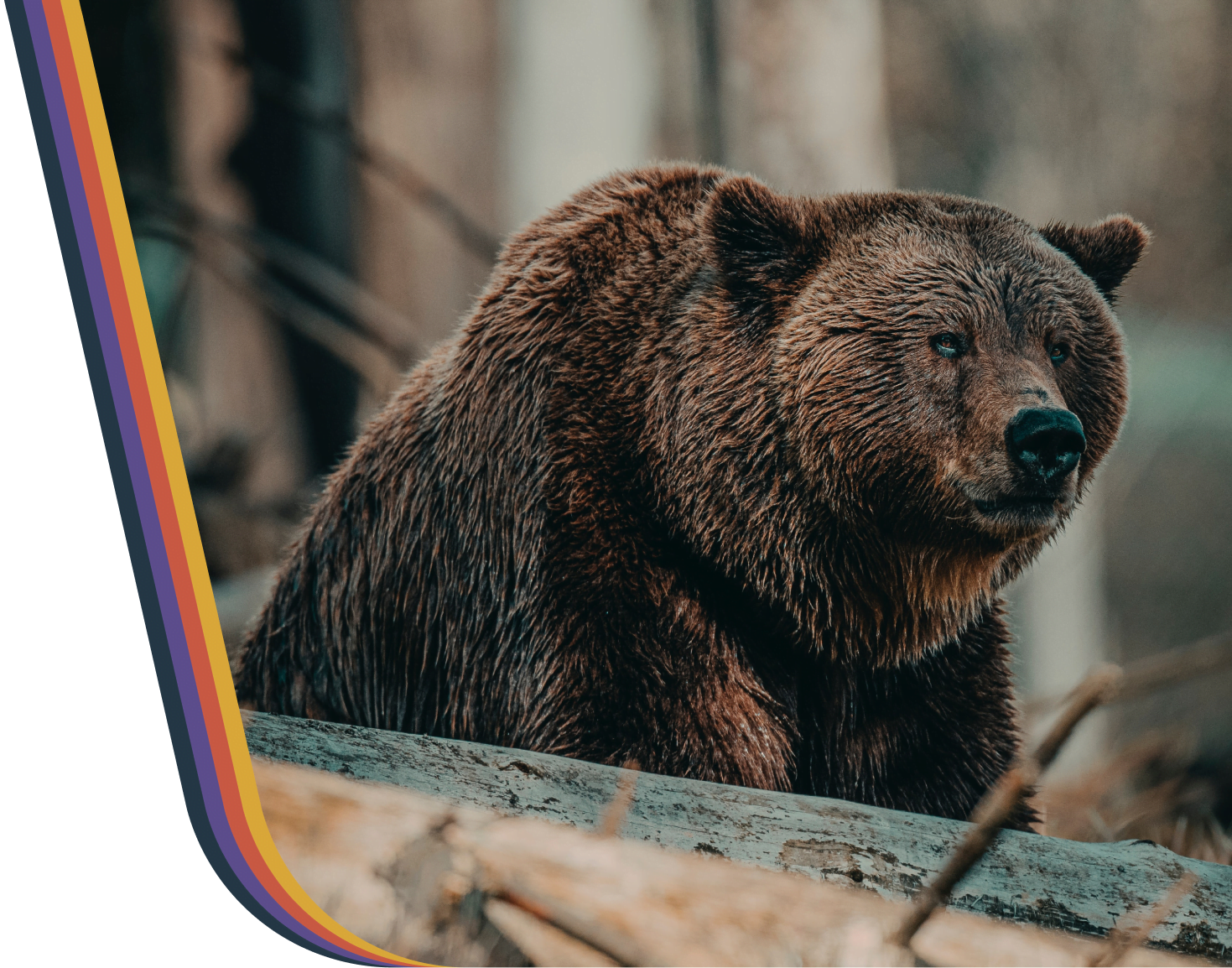
Brown bear
Locations around Glacier
Glacier Icon

Glacier National Park

Locations around Yellowstone
Yellowstone Icon

Yellowstone National Park

Locations in Grand Teton
Grand Teton Icon

Grand Teton National Park

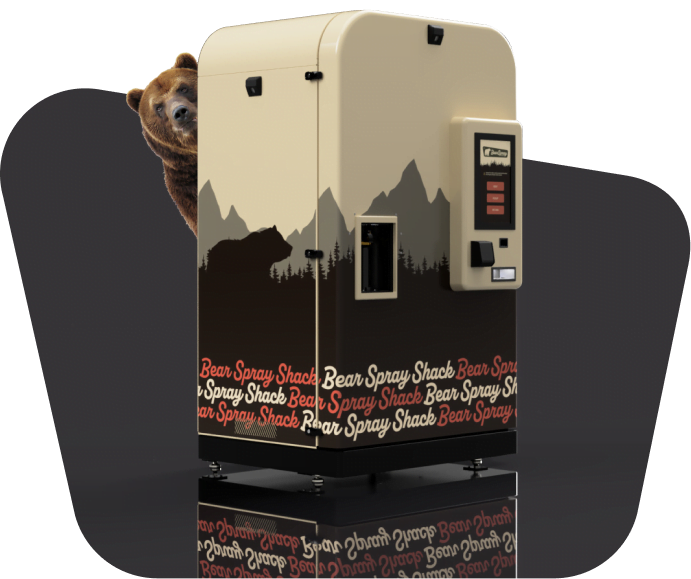
Bear Spray Rental Kiosk

How it Works

Bear Spray Shack is similar to your favorite red movie rental box but for bear spray. You can rent AND return our bear spray canisters straight at the rental machine.

We geek out on technology, and the programing behind Bear Spray Shack validates that every canister rented will be un-sprayed, at full volume, and safe for re-distribution.

Walk-up Rentals

Bear Spray Shack has the first and only completely automated bear spray rental vending machines. Just walk-up and follow the on screen instructions. Check our Real Time Inventory Status before heading out.

Scan the Can

Every canister has a QR code on the side that will bring you to our On the Go page. Perfect for those who need instructions on how to use bear spray or anyone wanting a quick refresher.

Any Location Drop Off

Multiple 24/7 Shack locations means returning your can of bear spray has never been easier. Even if you’re out exploring nature from dusk to dawn, you can conveniently return your rental to any location, any time.

When it comes to preserving your safety, peace of mind, and outdoor wildlife playgrounds at large, we believe that arming yourself with bear spray shouldn’t be a complicated or costly process.
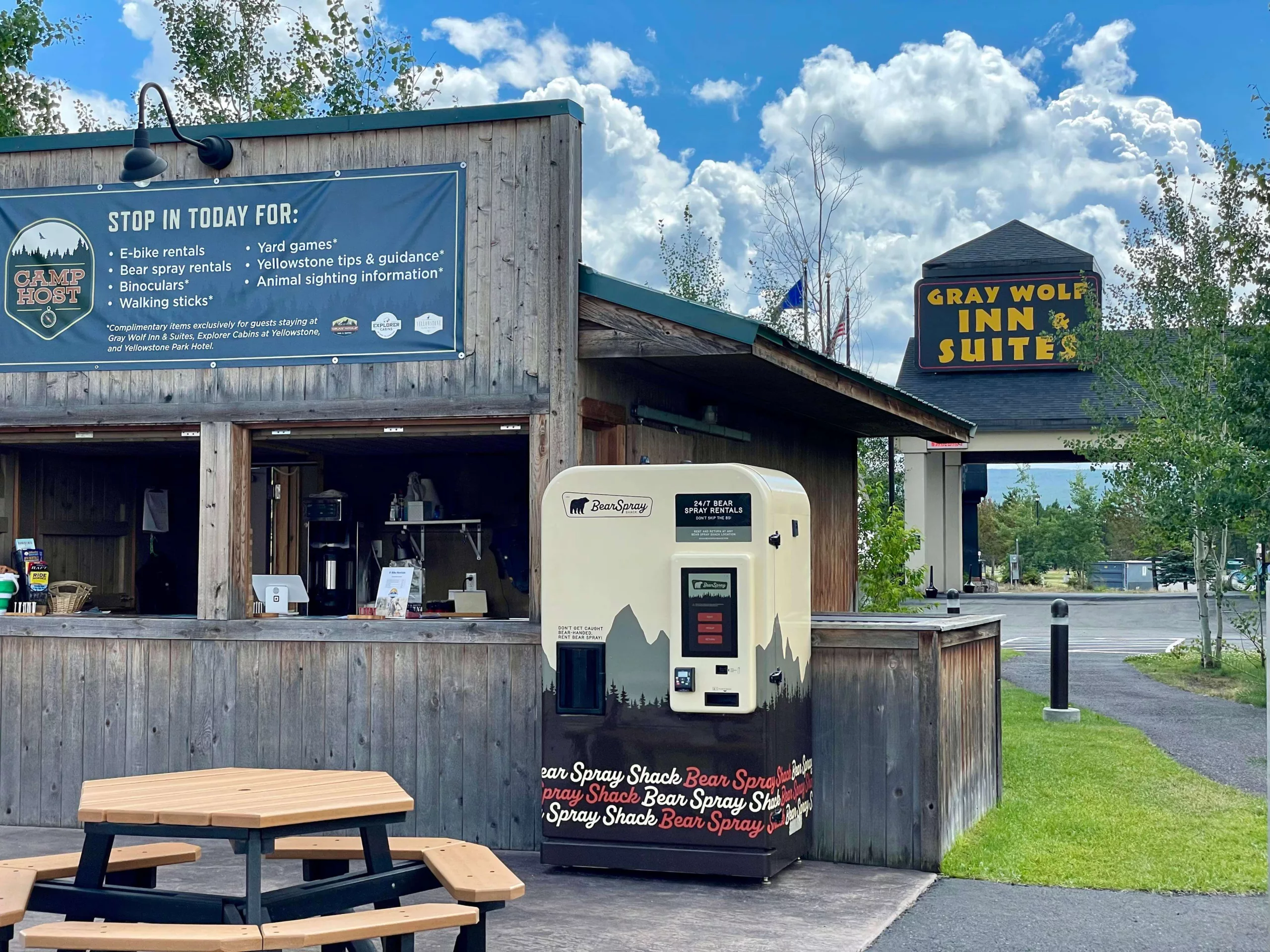
West Yellowstone Shack

How To Use
Bear Spray

If you’re not sure where to start with bear spray, we’ve got some tips and a step-by-step guide for how to use it that will make your life a lot easier—and maybe even save it!

Check out our Instagram for cool pics, giveaways, and captions that our moms brag about to their friends.

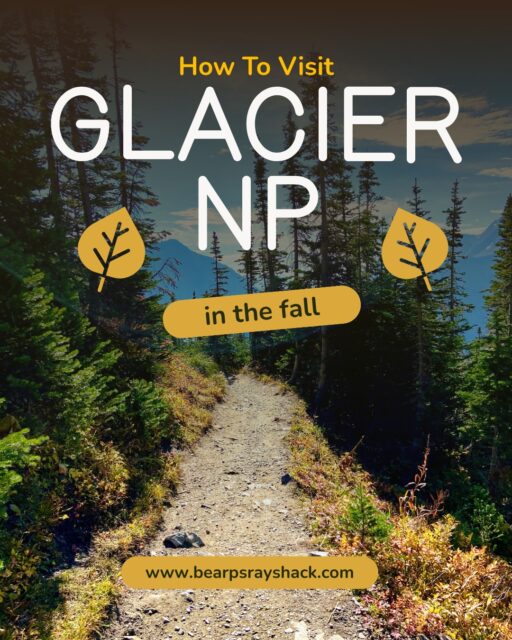
  • 🍁 Fall is one of the best times of year to see bears, and it’s all because of hyperphagia. No, it’s not another parasite on your lettuce. It’s hibernation preparation!
🍽️ Hyper = over/extreme, phagia = hunger/eating
🫐 In late summer and early fall (now!) bears enter a period of increased food consumption before they hibernate for the winter. On average, bears need 20,000 calories per day during this time to adequately prepare. This is 10x the amount of calories they need in the spring and summer. Think 78lbs of blueberries or 25,000 caterpillars. Yum.
• Food availability influences bear populations more than just the classic “less food = less animals survive” concept. Bears have what is called ‘delayed implantation’, meaning they mate in the spring, but embryos don’t implant in the sow’s uterine wall until fall. The fat reserves a sow has directly influences this implantation - not enough, and the bear won’t have cubs. 
• Bears are on a mission to gain as much weight as possible before entering their dens - up to 4 pounds per day! By the time a large grizzly enters its den in the GYE, it can weigh up to 600 pounds.
• Bears will be foraging and looking for food up to 22 hours a day and can be more aggressive during this time. Not only are they sleep deprived - they are also protective of vital calories. And, they might be so focused on food they may not notice you there.
• According to the Bridger-Teton National Forest Bear Ambassador Gene Palos, roadkill and people present the biggest potential conflicts for roadside bears. Friends of the Bridger Teton writes “While a dead carcass is natural food for a bear, having bears near the highway feeding makes them more likely to be struck by cars and come into contact with humans.”

📷 This video was filmed from inside a vehicle, using binoculars for a closer look.
  • Tomorrow is National Wildlife Day! If you’re following us, we assume you’re passionate about bears, and hopefully other wildlife too. But your love of wildlife doesn’t have to be concentrated to September 4th. You can learn, participate, and advocate for conservation all year long.

📖 Learn: What are the local and national wildlife issues you care about? Who has accurate and digestible information? Start small by finding resources, conservation organizations, and research happening near you.
🌲 Participate: You can volunteer on public lands near you to help maintain infrastructure like trails, restrooms, and trash cans, participate in habitat restoration projects or a trash pick-up day. All these actions mitigate our impacts on wildlife habitat. There might even be a wildlife rescue or rehabilitation center near you that accepts volunteers! 
📣 Advocate: This doesn’t have to be big. Advocacy can look like supporting local groups working towards educating the public or providing tools to encourage better human-wildlife interactions. It could be speaking up in a meeting about designating open spaces or conservation easements. For example, Wyoming Wildlife Advocates recently put out a call for volunteers, which involves distributing bear resistant tools to the community and discussing conservation issues at public events.
  • We love to hear where customers have explored after renting from us! Whether you’re headed to your campsite, on a day hike, or backpacking, you can rest assured that your canister is ready should you need to deploy it. Each canister passes multiple verification checks before it’s allowed to be re-rented. Every rental helps you have safe adventures and protects bears. 

Have a Bear Spray Shack memory to share? Drop a photo in the comments.
  • You might have seen a fellow hiker jingling around like it’s Christmas in July, or maybe you have some bear bells of your own. But…do bear bells keep you safer, or are they just part of a backcountry band? 🔔

Bear bells are marketed as a way to alert bears of your presence and reduce surprise encounters, rather than deter them. But is the bell worth your bucks? Tom Smith, a professor of wildlife sciences at BYU in Provo, UT says “From a biological perspective nothing in their world trains them that tinkling means anything.” His research also indicated that bears ignored human voices at normal conversational volume, but took note once they reached 110 decibels. Other research has shown that bell sounds reach shorter distances than human voices. 🗣️

What actually works: Bears might not hear your bear bells, especially if they are small or you’re hiking in heavy wind or near water. If bears do hear the bells, they’re probably not thinking “That’s a human being, and I should move away.” Clapping, loudly saying “hey bear!” and hiking in a group beats a bell. 👏
  • 🌻 We love to see wildflowers while hiking, and bears like them too! Grizzlies are known to eat many flowering plant species - some of the more common ones you might see include allium, arrowleaf balsamroot, beargrass (who wouldn’t eat the plant named after them?), camas, clover, cow parsnip, dandelion, and fireweed. Always be aware of your surroundings while recreating in bear country, even while you are re-enacting the Sound of Music in a wildflower meadow.
  • Get ready for another fee-free day! On August 25th, the National Park Service turns 110 years old, and to celebrate, US national parks are free to enter for all US citizens and residents.

Bonus fun fact: Did you know that some of our national parks are actually older than the Park Service itself? Yellowstone was the first national park, created on March 1, 1872 - 44 years BEFORE the NPS was established. 

Which national park are you visiting this Tuesday?
Bear Spray Shack Logo
Privacy Overview

This website uses cookies so that we can provide you with the best user experience possible. Cookie information is stored in your browser and performs functions such as recognizing you when you return to our website and helping our team to understand which sections of the website you find most interesting and useful.